
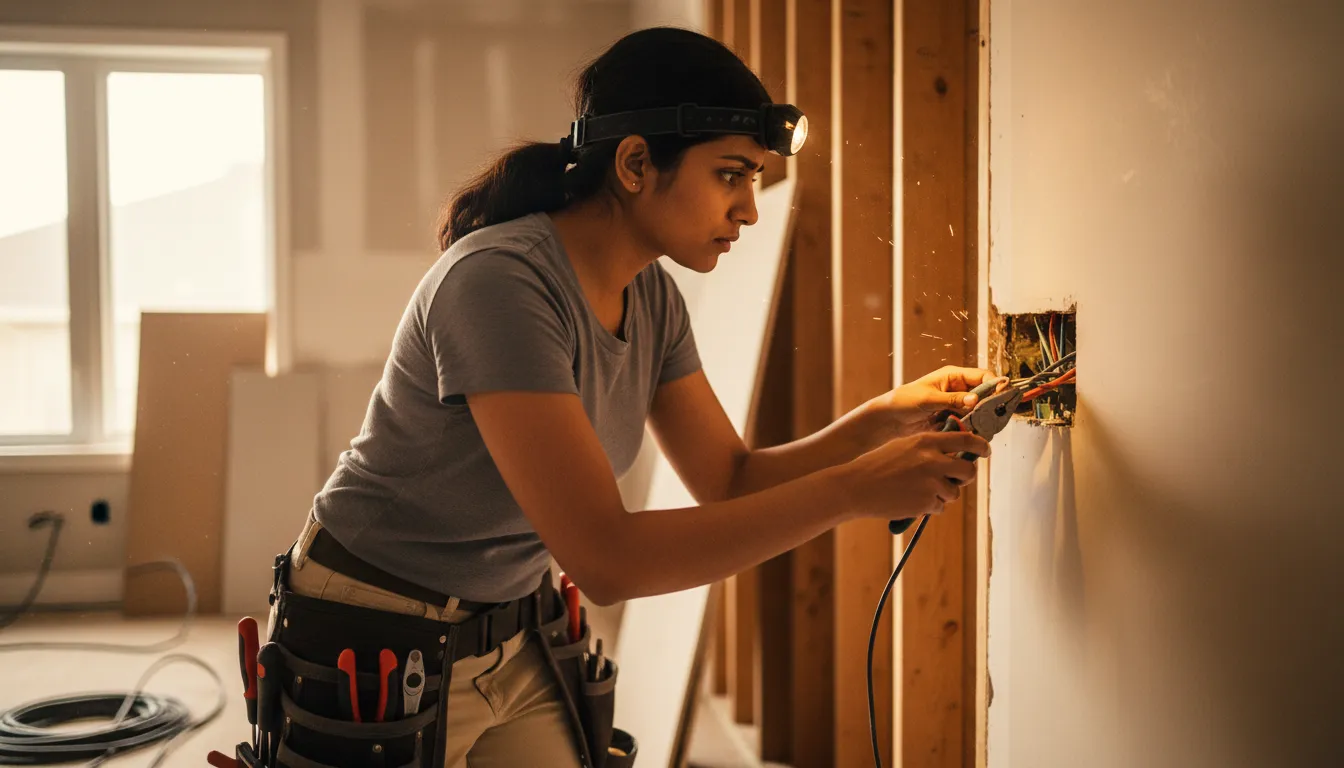
Flooring Installed to Match What's Underneath It, Not Just What's on Top
We install flooring across the GTA based on subfloor moisture readings and seasonal expansion behaviour, because those factors determine whether new flooring stays flat and tight for years.
Email Us for a Free EstimateWhy Flooring Choice Depends on the Room and the Season
The right flooring for a above-grade living room is not necessarily right for a below-grade basement or a bathroom, and the seasonal humidity swing across an Ontario year affects how much a material will expand and contract after it's installed.
Below-Grade Rooms Need Moisture-Tolerant Materials
Basements in this region sit closer to the water table and clay soils that hold moisture, which rules out certain flooring types that are fine on upper floors but will cup or delaminate below grade.
Humidity Swings Drive Seasonal Movement
Ontario's humid summers and dry heated winters put real wood and some engineered flooring through a wide moisture cycle each year, which is why expansion gaps and acclimation periods aren't optional steps.
Older Subfloors Often Aren't Level
Century and mid-century GTA homes frequently have subfloors with settling or unevenness that needs to be addressed before new flooring goes down, or the new floor will telegraph every irregularity underneath it.
Radiant and Forced-Air Heating Affect Material Choice
The type of heating system in a home changes how much thermal cycling the flooring experiences, which factors into underlayment and material recommendations.

Skipping Subfloor Moisture Testing Is Why Flooring Fails Early
Cupping, buckling, and adhesive failure in flooring almost always trace back to installing over a subfloor with a moisture content that was never measured. This is especially common on concrete slabs, where surface dryness can mask moisture still trapped below, and the failure doesn't show up until months after installation, well after the crew has moved on.
We Test Before We Install, Not After a Callback
Every flooring project starts with a moisture reading of the subfloor, whether it's a concrete slab or wood subfloor, using the method appropriate to that surface. Material selection and underlayment are chosen based on that reading, not on the homeowner's preferred look alone.
How We Sequence a Flooring Installation
Getting the prep steps right is what prevents flooring problems from appearing months later.
- 1
Subfloor Assessment and Moisture Testing
We test the subfloor for moisture and check for levelness issues before recommending a flooring type.
- 2
Material Selection and Acclimation
Flooring is selected to suit the room's moisture exposure, and materials that require acclimation are stored on-site for the appropriate period.
- 3
Subfloor Prep
Levelling compound, underlayment, or moisture barrier is applied as needed based on the assessment.
- 4
Installation With Proper Expansion Gaps
Flooring is installed with perimeter gaps sized for the material and expected humidity swing.
- 5
Trim and Final Walkthrough
Transitions and trim are completed, followed by a walkthrough to confirm fit and finish.
What We Prioritize on Flooring Projects
These practices are what separate flooring that stays flat from flooring that needs replacing early.
Moisture Testing Before Material Selection
We measure subfloor moisture on every project rather than assuming conditions are fine.
Room-Specific Material Matching
Flooring type is matched to whether the room is below grade, wet-prone, or above grade.
Expansion Gaps Sized to Climate
Perimeter gaps account for this region's humidity swing between seasons.
Subfloor Levelling Where Needed
Uneven older subfloors are corrected before installation rather than covered over.
Manufacturer-Compliant Installation
Installation methods follow manufacturer specifications to keep warranties valid.
Written Material and Underlayment Scope
Every material and underlayment choice is documented in the quote before ordering.
Flooring Installation Questions
Why do you test subfloor moisture before installing flooring?
Moisture trapped in a slab or wood subfloor is the leading cause of cupping, buckling, and adhesive failure. Testing tells us what material and underlayment will actually hold up in that specific room.
What flooring works best in a basement?
Materials tolerant of below-grade humidity and moisture perform best. We confirm the right option after testing your specific foundation conditions.
Do you install flooring in kitchens and bathrooms?
Yes, matched to the higher moisture exposure those rooms see, with appropriate underlayment and expansion detailing.
How long does flooring installation take?
Timeline depends on square footage, subfloor prep needs, and whether the material requires an acclimation period, which we outline in the written scope.
Can you fix an existing floor that's cupping or buckling?
We assess whether the cause is subfloor moisture, missing expansion gaps, or installation error, and address the root cause rather than just replacing the surface material.
Do older GTA homes need special flooring prep?
Often, yes. Uneven or settled subfloors are common in older housing stock and need levelling before new flooring goes down.
Ready to Replace or Install New Flooring?
Email us with your room type and current flooring, and we'll follow up with a written quote.
Email Us for a Free EstimateLocal conditions matter — email us for same-day service.
Fall home-service conditions in Aurora, ON
Fall around Aurora, ON is the season to prepare your home before winter sets in.
Proudly Serving Aurora, ON
Local, on-time service throughout Aurora and the surrounding area.