
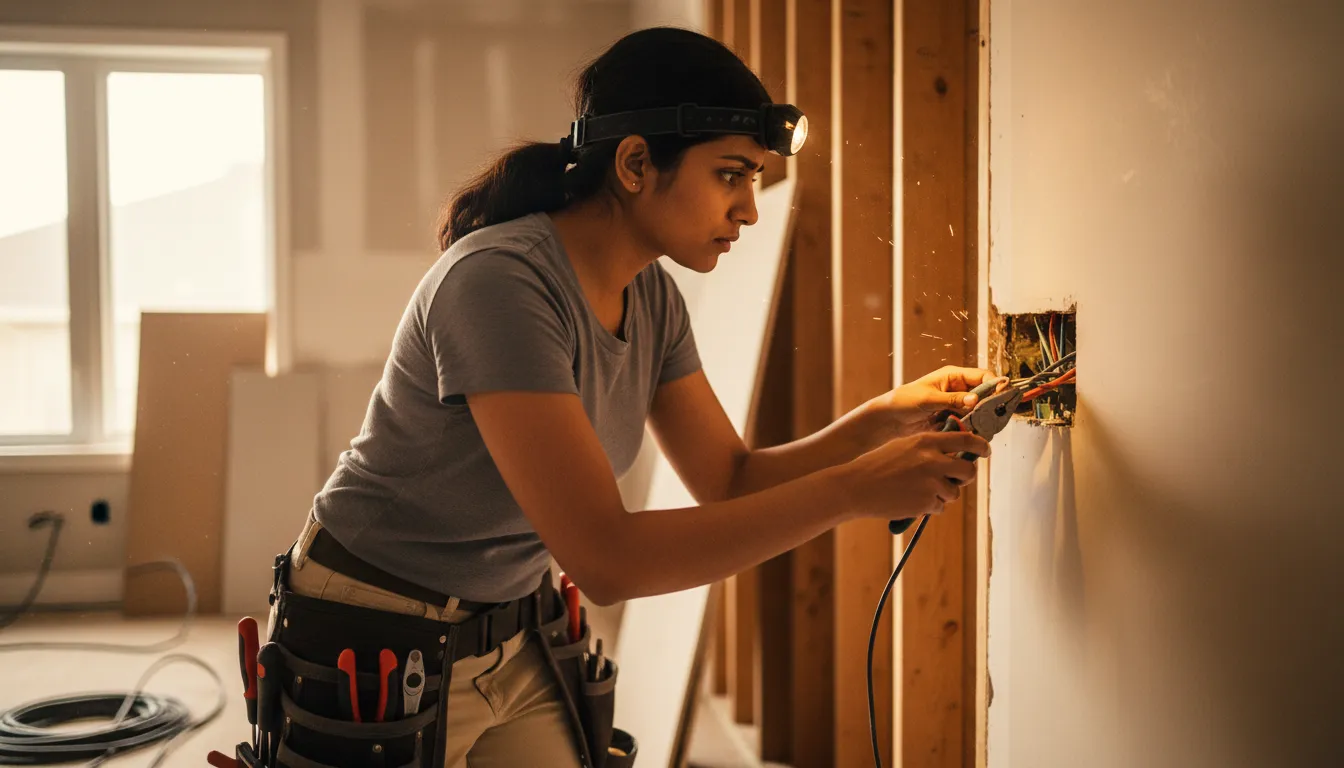
Bathroom Renovation That Starts With the Exhaust Path, Not the Tile Sample
We renovate bathrooms across the GTA around proper ventilation and waterproofing detail, because those two systems determine whether the finishes last a decade or fail in three years.
Email Us for a Free EstimateWhy Bathroom Renovation Requires More Than a Style Decision
A bathroom is the highest-humidity room in most GTA homes for a large part of the year, and the room most likely to have had its ventilation compromised by a prior renovation. Getting the waterproofing and exhaust systems right matters more than any tile pattern.
Humid Summers Push Moisture Into Wall Assemblies
Southern Ontario's summer humidity means a bathroom without adequate exhaust capacity is pushing moisture into drywall and framing on a near-daily basis during warmer months.
Older Homes Often Vent Fans Into the Attic
It's common in older GTA housing stock to find bathroom exhaust fans terminating in the attic space rather than outdoors, which drives moisture into insulation and roof sheathing instead of removing it from the home.
Tile and Grout Alone Are Not Waterproofing
Grout is not a waterproofing layer. Shower and tub surrounds need a membrane system behind the tile to actually stop water migration into the wall assembly.
Winter Condensation Adds a Second Moisture Load
Cold GTA winters create condensation on poorly insulated bathroom exterior walls and windows, adding to the moisture burden the room's ventilation system has to manage year-round.

An Undersized or Misvented Exhaust Fan Is Behind Most Bathroom Callbacks
When we're called to look at peeling paint, soft drywall, or recurring mould near a bathroom ceiling, the fan is almost always part of the problem — either too small for the room's volume, vented into an attic instead of outside, or simply not run long enough by the household because it's noisy or on a switch nobody uses consistently.
We Size and Terminate Ventilation Correctly, Every Time
Fan capacity is selected based on room volume, not a default part number, and every termination point is run to the exterior, never into an attic or soffit cavity. Where useful, we install humidity-sensing controls so the fan runs long enough without relying on the household to remember a timer.
How a Bathroom Renovation Is Sequenced
Waterproofing and ventilation decisions happen before any finish material is ordered.
- 1
Assessment and Ventilation Review
We check current exhaust fan sizing, termination point, and any signs of existing moisture damage before designing the new layout.
- 2
Waterproofing and Fixture Plan
Shower and tub surrounds are planned around a membrane waterproofing system, and fixture locations are set relative to plumbing rough-in.
- 3
Demolition and Rough-In
Old finishes are removed, and plumbing, electrical, and ventilation rough-in is updated to current code where required.
- 4
Waterproofing and Tile Installation
Membrane systems are installed to manufacturer specification before tile goes on, followed by grout and sealant.
- 5
Fixture Install and Final Walkthrough
Vanity, toilet, and fixtures are installed, ventilation is tested, and a final walkthrough confirms the space is complete.
What Governs Our Bathroom Renovation Approach
These priorities are what determine whether a bathroom renovation holds up in this climate.
Exhaust Sizing to Room Volume
Fan capacity is calculated for the specific room, not assumed from a standard part.
Exterior-Terminated Ventilation
Every exhaust fan we install or reroute vents to the outside, never into an attic cavity.
Membrane Waterproofing as Standard
Shower and tub surrounds get a proper waterproofing membrane behind the tile as default practice.
Condensation-Aware Window and Wall Detailing
Exterior wall and window assemblies are checked for insulation gaps that drive winter condensation.
Code-Compliant Electrical Near Water
GFCI protection and fixture placement are set to current code requirements near wet areas.
Written Fixture and Material Scope
Every fixture, tile, and finish selection is documented in the quote before ordering.
Bathroom Renovation Questions
Why does my bathroom exhaust fan matter so much?
In our humid summers and cold winters, an undersized or misvented fan is the leading cause of mould, peeling paint, and soft drywall in bathrooms. We size and terminate every fan correctly as part of the renovation.
Is grout enough to waterproof a shower?
No. Grout is not a waterproofing layer on its own. We install a membrane waterproofing system behind the tile on every shower and tub surround.
Can you fix a bathroom that already has moisture damage?
Yes. We assess the extent of the damage and the underlying cause, typically ventilation or waterproofing failure, and address that as part of the renovation scope.
How long does a bathroom renovation take?
Timeline depends on scope, whether plumbing or electrical rough-in changes, and material lead times, which we detail in the written quote.
Do you handle permits for bathroom renovations?
Where plumbing or electrical changes trigger a permit requirement, we manage that application as part of the project.
Can you match my bathroom renovation to an older home's plumbing?
Yes. Older GTA homes often have galvanized or outdated plumbing that needs assessment before a renovation proceeds, and we account for that during the site visit.
Planning a Bathroom Renovation?
Email us your bathroom's current layout and any moisture concerns, and we'll follow up with a written quote.
Email Us for a Free EstimateLocal conditions matter — email us for same-day service.
Fall home-service conditions in Aurora, ON
Fall around Aurora, ON is the season to prepare your home before winter sets in.
Proudly Serving Aurora, ON
Local, on-time service throughout Aurora and the surrounding area.